Almost all process liquids are filtered at some point. Filters are essential components used to remove unwanted particles from liquids or gases, ensuring product quality and system reliability. This article focuses on filters used specifically for liquid filtration.
What is a filter
A filter is a device that separates solid particles from a fluid by passing the fluid through a filter medium. This filter medium acts as a physical barrier and allows the fluid to flow while retaining the solids.
The process by which a filter separates the solid particles is called filtration.
Want a quick visual walkthrough? The video below explains the major types of liquid filtration and their industrial applications in just a few minutes.
Liquid filtration types
Depending on the application and operating conditions, there are different types of filtrations used in industry.
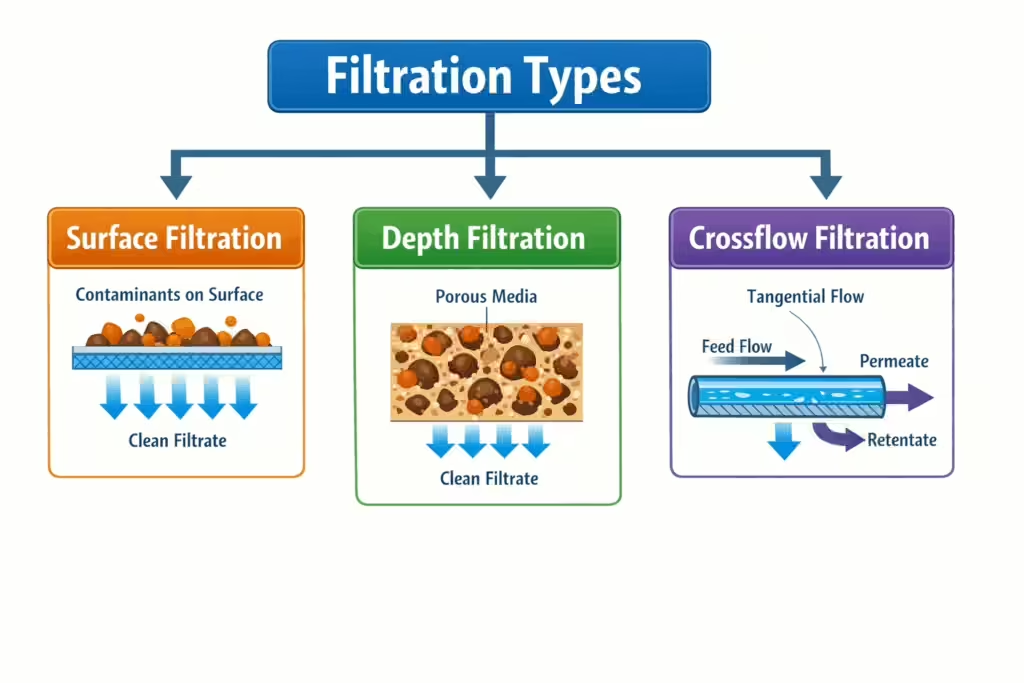
Surface Filtration
This Works like a sieve. Particles larger than the pore size are blocked on the surface. Straining is a common everyday example of this kind of filtration method, which is based on size exclusion, where particles larger than the filter openings are trapped on the surface while smaller ones pass through.
The trapped particles gradually form a layer, which is called the filter cake. The developing cake acts as an additional filtration barrier, effectively removing more contaminants over time. It enhances filtration but also increases differential pressure. Initially, surface filter efficiency is approximately 50-60%, but as the filter cake accumulates, the efficiency improves, potentially reaching 100%.
In the process industry, membrane (or woven fabric) filters are a good example, as they can retain bacteria and are often used as the final step to achieve sterile filtration.
It is cost-effective, easy to clean, and suitable for water pre-treatment, paint, and coolant filtration. One of the disadvantages is that the high solids can cause quick clogging and frequent maintenance.
Surface filters, such as cartridge and disc filters, are cost-effective for applications with low contaminant levels and where very fine particle removal is not required. But they have limited dirt-holding capacity and can be prone to clogging. To maintain performance, they may require frequent cleaning or replacement. However, many can be cleaned and reused, providing a practical balance between cost and ease of use.
Below is an animation showing the surface filtration as well as the depth filtration, which we are going to see next
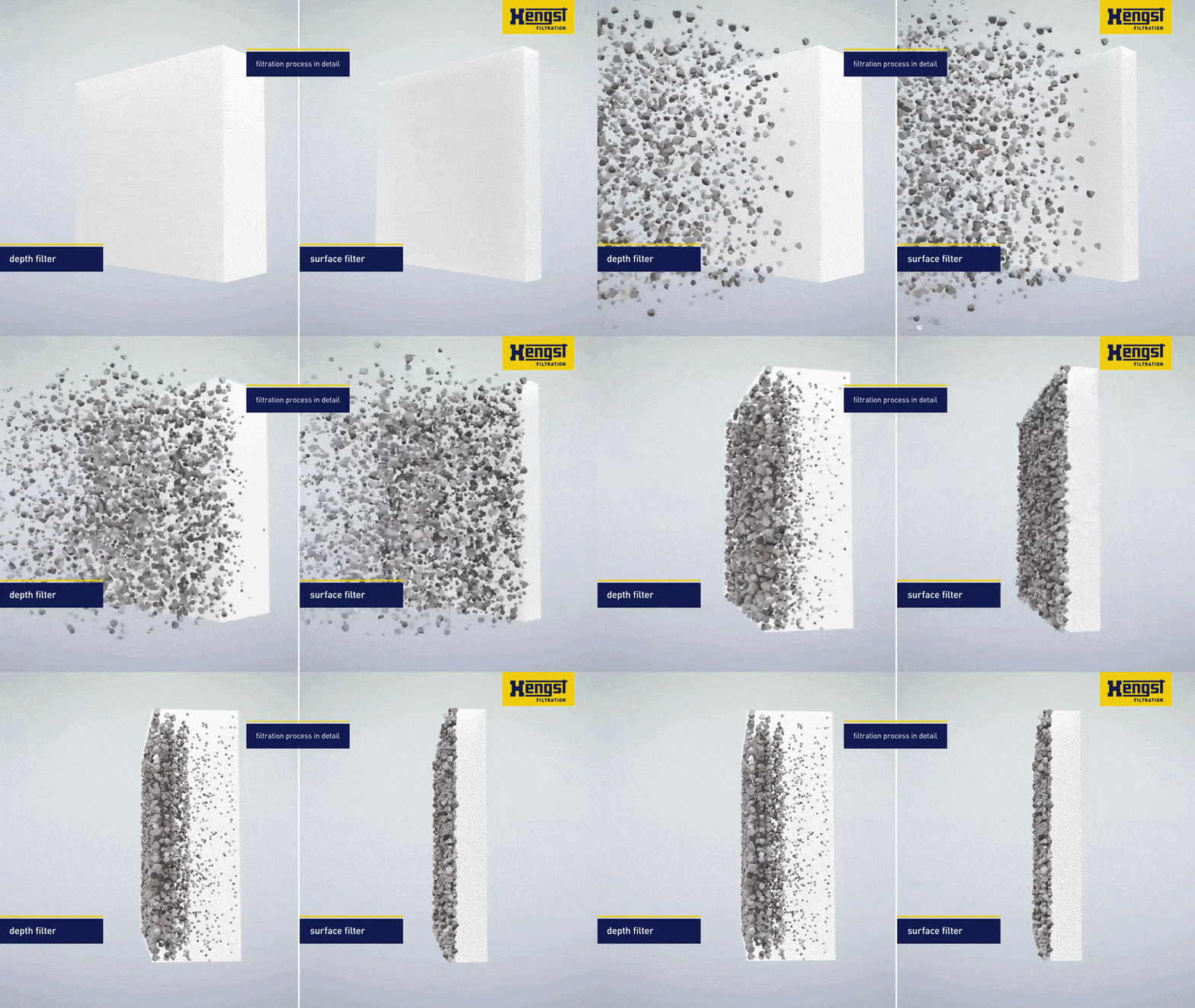
Depth Filtration
Depth filtration captures particles throughout the full thickness of the medium. This method uses a multi-layered medium with increasing density through its thickness. Larger particles are captured near the surface, while smaller ones are trapped deeper inside. The complex internal structure creates a long flow path, improving the removal of fine particles, colloids, and some dissolved substances. Due to inertial forces, fluid pressure, or Brownian motion, particles first contact the flow channel walls and then stick to them or cluster together under forces like van der Waals attraction, with even finer particles than the channel diameter captured deeper within the material. giving higher dirt-holding capacity and longer service life than surface filters. It handles a wider range of particle sizes, making it suitable for variable feed conditions.
An example of this is a sterile-grade depth filter for air, which has an average pore size of 8 µm but is capable of retaining bacteria of 0.22 µm with a sterile-grade efficiency. Common types include pleated, melt-blown, and string-wound cartridges, widely used in beverage, pharmaceutical, and oil filtration.
Depth filters are cleaned by backflow, where the flow is reversed to remove trapped particles and clear the pores. They are more expensive than surface filters, but they offer a longer service life.
It has a longer lifespan, higher solid-holding capacity, and is effective for a range of particle sizes. Its disadvantages are a higher initial cost, may require higher pressure for operation.
Depth filtration is used in prefiltration, pigment removal, or catalyst recovery.
Crossflow filtration
Cross-flow filtration is also known as tangential flow filtration. In crossflow filtration, the fluid flows along the surface of the membrane instead of directly through it. Since it flows along the surface, it takes away the dirt that remains on the surface with it, and this reduces the clogging.
The size of the pores and the filter material determines what passes through and what holds back. The solution that passes through is called permeate. The retained material, called retentate, is recirculated to the supply tank and looped through the filter as long as the process runs.
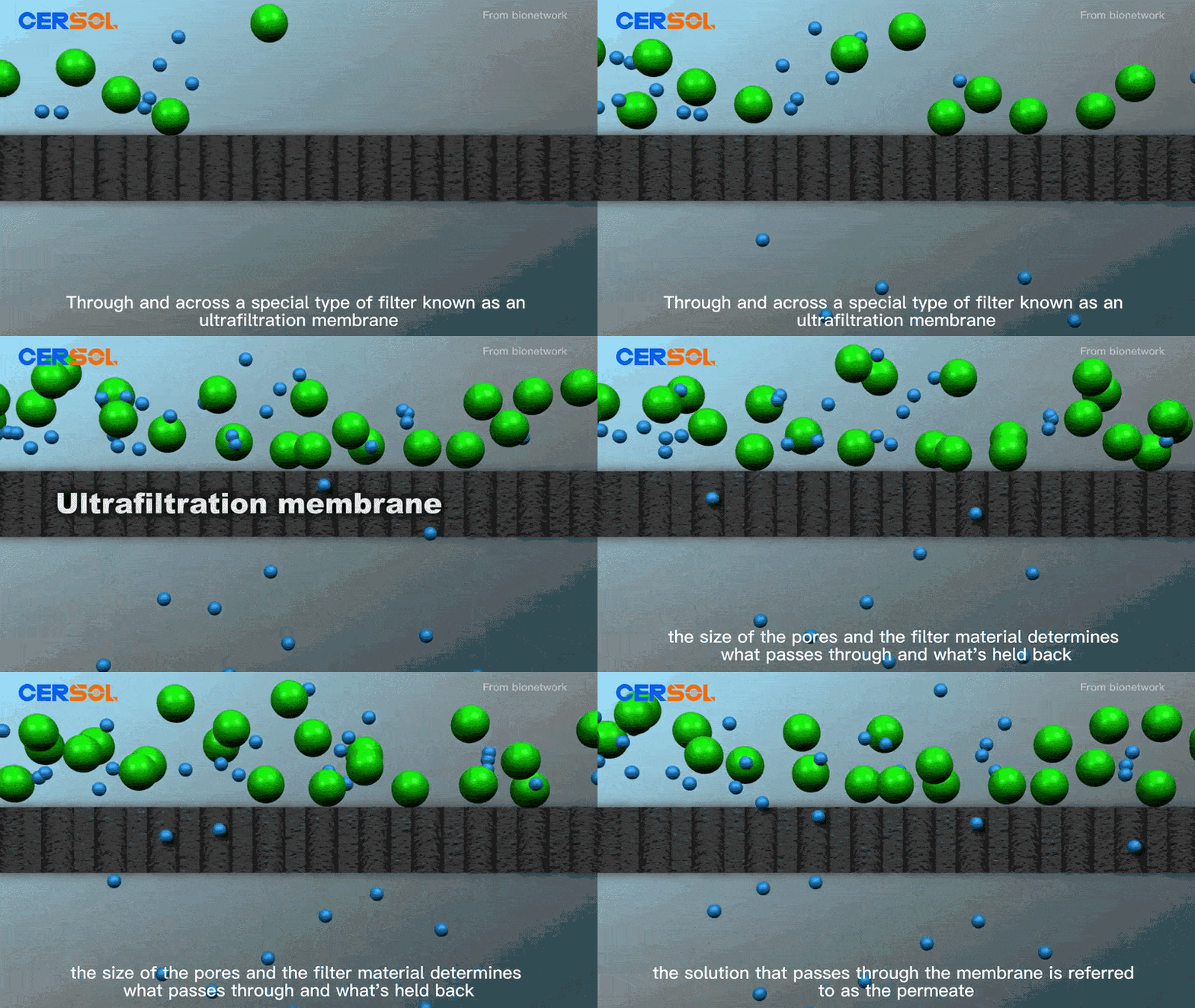
Crossflow filtration is used where frequent replacement is to be avoided due to membrane clogging. This is used in biotech, dairy production, and water treatment, where steady flow is important.
A common example is Reverse Osmosis, where only water passes through while salts, chemicals, and microorganisms are removed. It is widely used in dairy, biopharma, and large-scale water purification for continuous operation.
Types of liquid filter by media/ design
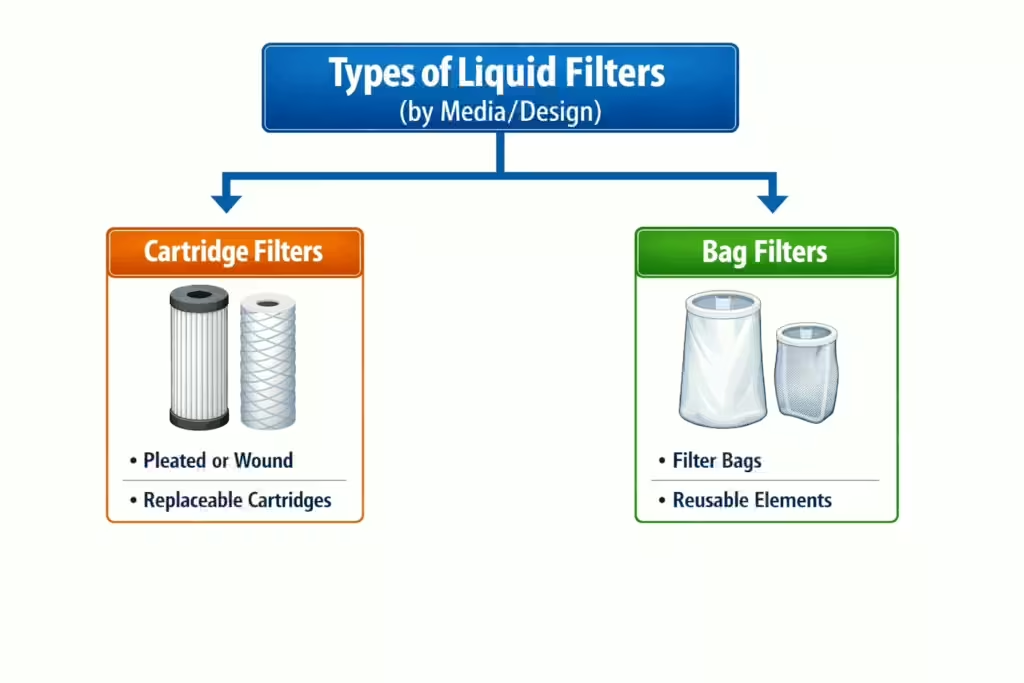
Cartridge filters
Cartridge filters are widely used in industrial liquid filtration, with replaceable elements such as pleated, melt-blown, string-wound, or sintered types or membrane materials installed inside permanent housings. Filter cartridges are made from rolls of filter media that are wound in such a way that multiple layers overlap each other. These cartridges are placed inside a housing, and a single housing can hold one or several cartridges at the same time.
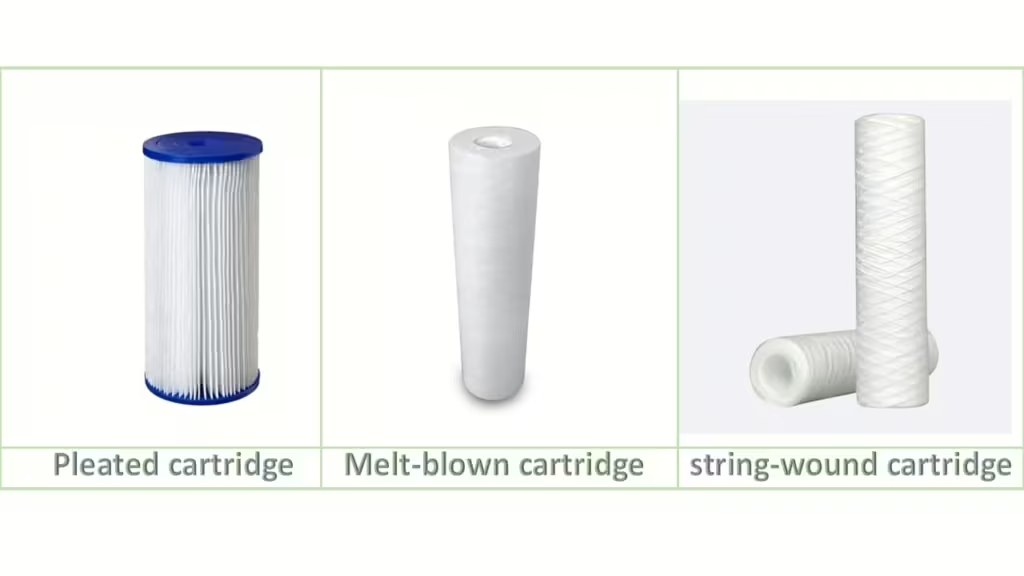
Cartridge filters can work in two ways—either as surface filters or depth filters. When the cartridge is pleated, it acts as a surface filter, meaning the filter media stops solid particles at the surface and prevents them from passing through. When the cartridge is made of wound layers, it works as a depth filter, where the many layers capture and hold particles throughout the thickness as the fluid (slurry) flows through it. Below is an image showing the parts of a pleated cartridge.
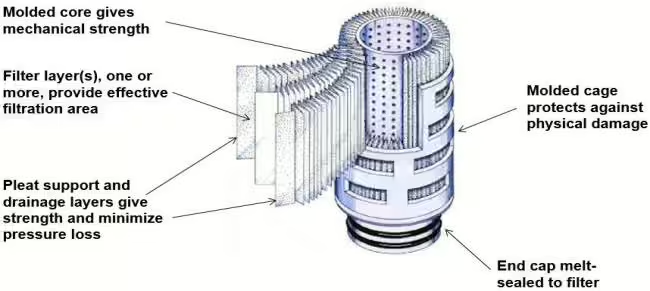
They provide precise filtration and are well-suited for regulated applications due to easy validation. However, in high-flow or high-solids conditions, frequent replacements can increase maintenance effort and operating costs.
Bag filters
A bag filter utilizes a porous bag to capture solid particles from liquids or gases. They have a simple, low-cost design and are placed inside a housing. The liquid (slurry) flows through the bag, which traps the solid particles.
Bag filters have higher dirt-holding capacity and generate less waste, making them suitable for applications like Batch processing, paint, coolant, and oil filtration. They are cost-effective when filter changes are frequent, and waste disposal is a concern. The image below shows the parts of a bag filter.
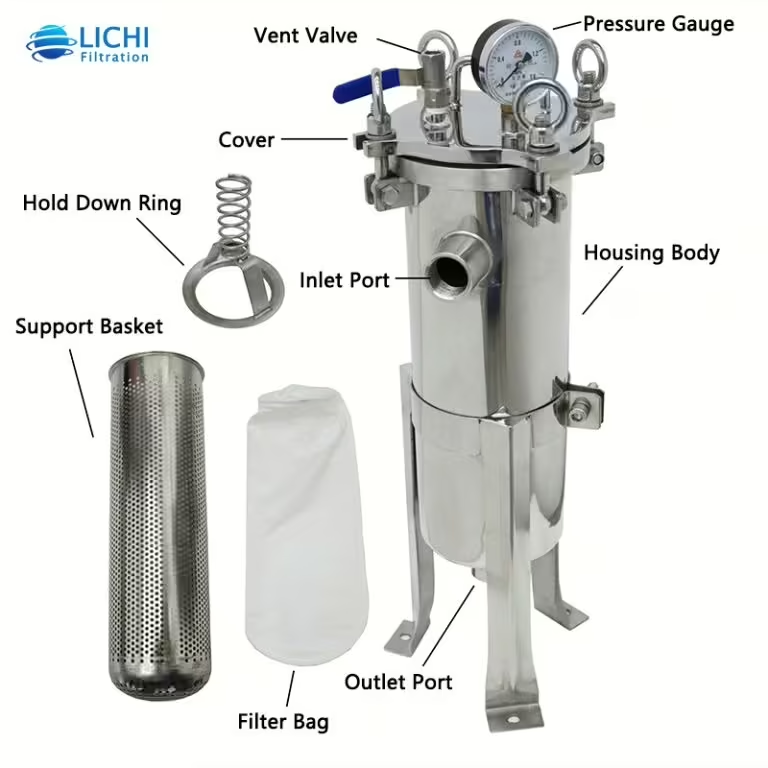
Bag filters are made from materials like felt, porous membranes, or layers of mesh using natural or synthetic fibers. Many are made from polypropylene felt, which is safe for use in food, beverage, and pharmaceutical applications.
However, for absolute particle retention or sterile filtration, cartridge filters are preferred, and many systems use both together.
Types of liquid filter by installation
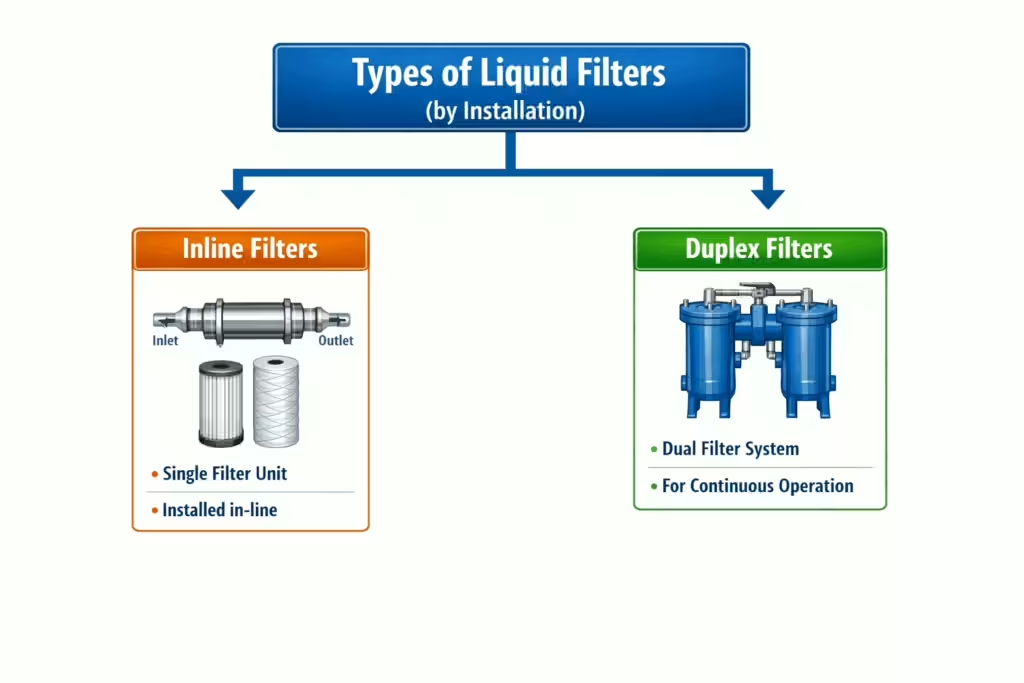
Inline Filters
These are compact, high-efficiency filters installed directly in the pipeline or process flow. They allow filtration of liquids or gases without disturbing the system layout. Their advanced design uses pleated filter media with a high surface area, providing efficient filtration without restricting flow and maintaining performance across different pressure and temperature conditions.
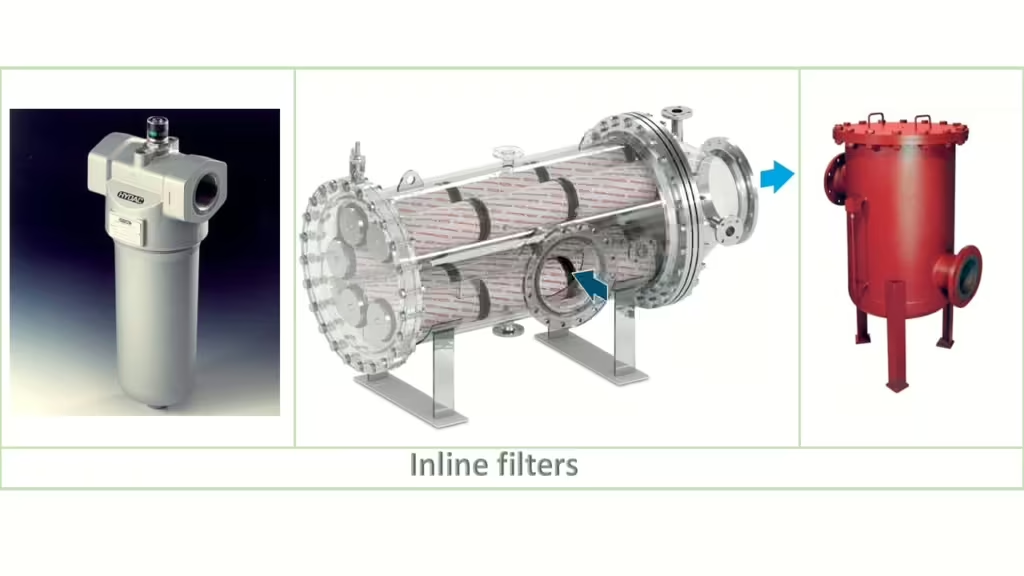
An inline filter works by allowing the fluid to enter the filter housing and flow from outside to inside through the filter element. Solid particles are trapped on the outer surface of the element, while clean fluid passes through and exits the system. As particles build up, the pressure drop increases, and the filter element is replaced once a set differential pressure is reached.
They capture dirt and solid impurities before they can damage components like pumps, valves, and nozzles. By offering continuous filtration, they act as a first line of protection, helping systems operate smoothly and reliably. Inline filters are widely used in water treatment, chemical, and food applications due to their small size and easy maintenance.
Duplex Filters
Duplex filters consist of two filter housings connected in parallel, allowing one unit to operate while the other is on standby or under maintenance. This design ensures uninterrupted filtration, making them ideal for processes where a shutdown is not acceptable.
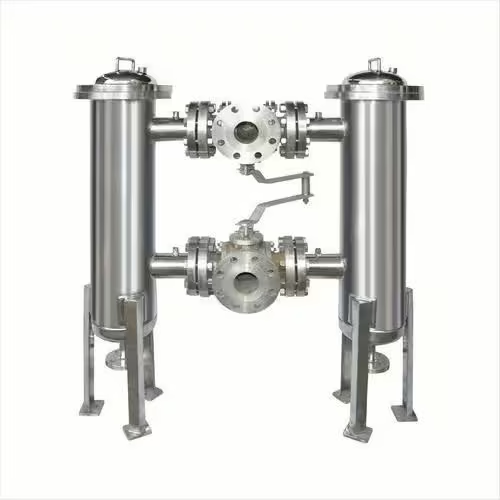
In operation, fluid flows through one housing while the other remains isolated. When the active filter becomes clogged and reaches a set pressure drop, the flow is switched to the standby unit, allowing cleaning or replacement without stopping the system.
They provide reliable, continuous protection for equipment by removing contaminants without process interruption. Duplex filters are widely used in industries such as oil & gas, power plants, and chemical processing, where uptime is critical.


Charles Palmer
Very impressive coverage of Filtration technology, Thank you.
I founded an Hydraulics department many years ago and discovered that the existing 40micron filters installed on our many Hydraulic drives were completely inefficient. Being an Instrument Engineer by profession, I removed all these return oil filters, replacing them with dual 4micron filters, auto changeover with alarming capabilities based on differential pressure across each filter. The results, coupled with a move from Gear pumps to Volvo Piston pumps and an oil change from a supposedly reputable brand to Mobil DTE 15 all made the multiple systems almost bulletproof ; the savings in downtime and a massive reduction in maintenance saved the company in excess if $1m per annum; the filtration was deemed as THE most important improvement. Very much overlooked technology, so thanks once again for the very enlightening article. Kind regards,
Charles